Table of Contents
Casablanca Morocco: Glorious Disillusion and the Soul of a Modern Giant
Let’s be honest: Casablanca often disappoints at first glance. It doesn’t have the historical postcard of Fez, the colorful shimmer of Marrakech, or the blue charm of Chefchaouen. What you see first from the highway are office buildings, highway interchanges, and an urban sprawl that seems endless. I admit I felt that too.
But staying with that first impression is like judging a book by its dull cover. Casablanca is the anti-Marrakech. It’s the city that doesn’t play at being exotic for you. It works, it creates, it looks toward the ocean and the future. It offers you not a journey into the past, but a vibrant, sometimes rough dive into today’s Morocco. And for those who know how to listen, it becomes a revelation.
The Monument and the Sea: The Hassan II Mosque and the Corniche
It all starts here, inevitably. The Hassan II Mosque is not just a place of worship; it’s a statement of intent, an engineering marvel, and the true symbolic heart of the city. Built over the sea, its 200-meter minaret is the tallest in the world. The first time I saw it at sunset, feet in the surf, its green laser light cutting through the twilight sky, I was struck by its audacity. The guided tour (the only option for non-Muslims) is essential. Inside, the prayer hall, accommodating 25,000 worshippers, is breathtakingly beautiful: Carrara marble, infinitely complex zellij (mosaic tilework), a crafted cedar ceiling that opens. You feel the pride of an entire nation.
On your way out, turn left and walk. You’ll arrive at the Corniche, the city’s seaside artery. This is where Casablanca breathes, sheds its work suit. On weekends, it’s a constant flow of families, joggers, friends sipping orange juice on a bench. On one side, the Atlantic crashing against the rocks; on the other, a succession of 1930s pools, modern cafes, and seafood restaurants. The vibe is relaxed, almost Mediterranean. For a coffee with a view, Miami Plage or Caesars are slightly worn but characterful institutions.

The Hidden Treasure: The Habous Quarter and the Old Medina
Contrary to popular belief, Casablanca has a medina. Two, in fact. Don’t look for the sprawling maze of Fez; Casablanca’s is smaller, more orderly, and, above all, less touristy. It’s a real, living neighborhood.
The real gem is the Habous Quarter (or “New Medina”), built under the French protectorate in the 1920s. It’s a successful architectural pastiche, blending Moorish art and modern needs. The alleyways are wide, clean, lined with arcades. Here, people come to buy their bread, argan oil pressed before their eyes, traditional pastries, or books. The scent of cedar wood floats from carpentry workshops. It’s serene, authentic, and here you’ll find some of the city’s most beautiful bookshops and traditional tea houses, far from the crowds.
Nearby, the Royal Palace (Dar el-Makhzen) and its vast méchouar (ceremonial square) are worth a detour for a glimpse of official grandeur, though the interiors are not visitable.
An Open-Air Museum: Art Deco and Moorish Architecture
This is perhaps the greatest pleasure of “Casa”: looking up. The city is an extraordinary museum of early 20th-century architecture, born from the creative frenzy of the 1930s. The city center (around Boulevard Mohammed V and United Nations Square) is its stage.
How to discover it? Just go for a walk. Look for the facades:
- The stylized floral motifs, mosaic fountains, curved balconies, and stained glass of Art Deco buildings.
- The mashrabiya windows and geometric arabesques of the Moorish style, revisited with a modern touch.
- The extravagant ironwork and vintage typographic signs.
A few absolute stars: the Liberté building (Place de la Liberté), the Rialto Cinema, the former Transatlantique Hotel (now the Wilaya headquarters), and the sublime Mohammed V Theater. For enthusiasts, associations organize themed guided tours. Otherwise, simply get lost. Step into building lobbies (if the doors are open, discreetly) to discover marble staircases and magnificent skylights. It’s this layer of modern history, this slightly faded elegance, that gives Casa its unique and melancholic charm.

Living Like a “Casaoui”: Markets, Cafés, and Nightlife
To touch the city’s pulse, you have to go where the locals go.
- The Central Market: My favorite. Under a large 1930s hall, it’s a festival of colors and smells. The fish stall is a spectacle in itself – you’ll find everything the Atlantic offered that very morning. Next to it, greengrocers overflow with fruits and vegetables. Upstairs, small restaurants serve market products, grilled to order. It’s the perfect spot for a fresh, simple, and delicious lunch.
- Historic Cafés: Casablanca has a real café culture. Café de France on United Nations Square is an institution for watching the flow of hurried Casaouis. Café La SQALA, set in a former Portuguese battery surrounded by gardens, is an incredible oasis of peace for mint tea.
- The Night: In the evening, the Corniche comes alive in a different way. For a trendier, more contemporary atmosphere, head to the Gauthier or Racine districts, where art galleries, designer boutiques, and excellent restaurants are multiplying. Maine Food at the old wholesale market (Marché de Gros) is a perfect example of this revitalization: an industrial space transformed into a trendy gastronomic hub.
The Casaoui Table: Seafood, Modernity, and Wine
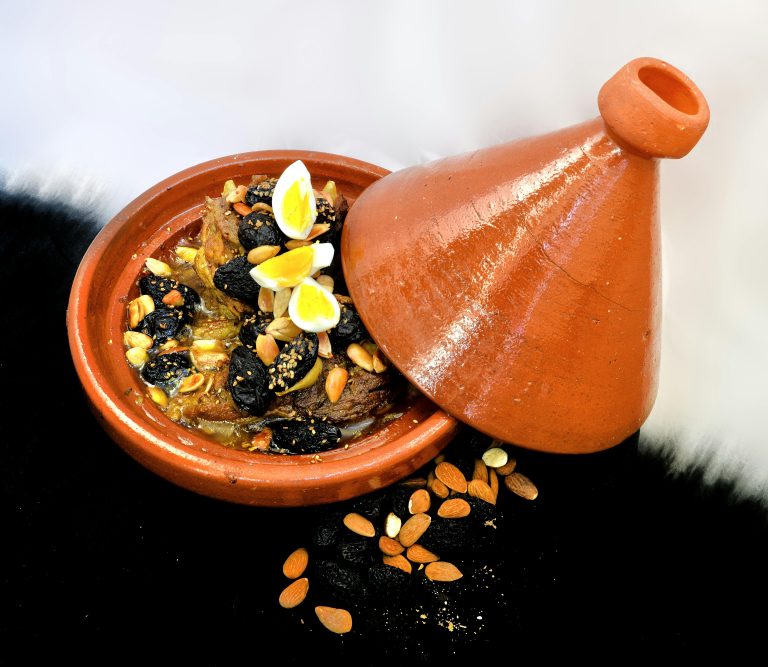
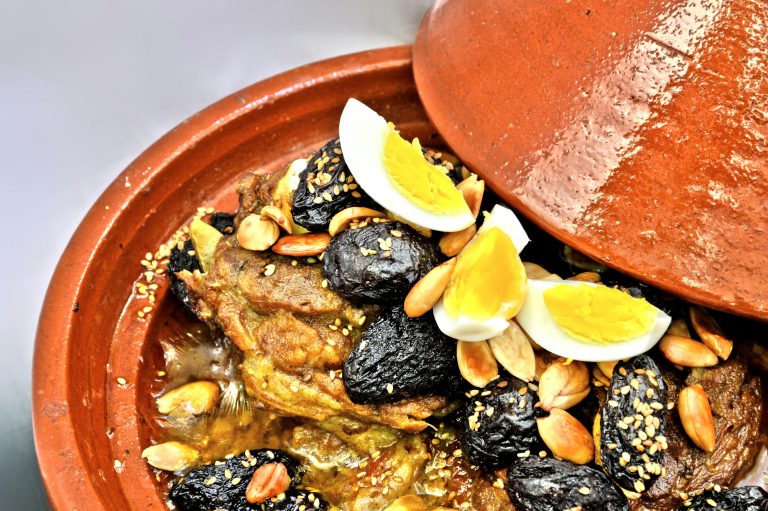
Forget the ubiquitous tagine. Here, it’s the reign of fresh produce and a booming culinary scene.
- Seafood, Obviously: It’s the absolute specialty. At the Central Market, the Fishing Port (where you choose your fish on the dock before having it grilled at one of the rudimentary stalls), or in Corniche restaurants like Cabestan or La Mer. Order grilled prawns, baked sea bream, sea urchins, or an octopus salad. Pair it with a Moroccan white wine – the local production, especially from the Meknes region, is excellent and will surprise the most skeptical.
- The New Gourmet Scene: Casablanca is the laboratory of modern Moroccan gastronomy. Chefs reinterpret classics with exceptional presentation and products. Addresses like NKOA (creative Moroccan cuisine) or Le Gatsby (chic brasserie) are its ambassadors.
- The Essential Snack: The fried fish sandwich. A baguette, a perfectly fried whiting or sardine fillet, salad, spicy condiments. Quick, delicious, and typical. Look for the small stalls frequented by locals.

Beautiful Escapes: Rabat and El Jadida
Casablanca is perfectly located for day trips.
- Rabat: Just 1 hour by train (the trains are modern, frequent, and punctual). The administrative capital offers a total contrast: calm, green, full of history. Visit the magnificent Hassan Tower and the Mohammed V Mausoleum, the elegant Kasbah of the Udayas facing the ocean, and the fascinating Mohammed VI Museum of Modern and Contemporary Art (MMVI). It’s a breath of fresh air and history.
- El Jadida (Mazagan): 1.5 hours south, this coastal city has a Portuguese fortress that is absolutely magnificent and UNESCO-listed. Its ramparts, quiet streets, and famous Portuguese Cistern (an underground space with magical water reflections) will transport you. Perfect for combining history and a stroll by the water.
The Urban Survival Guide (Very Pragmatic)
- Getting Around: The tramway is clean, efficient, and crosses the city east-west. It’s the best way. For the rest, the little blue petits taxis are legion. Insist on using the meter. Ride-hailing apps like Careem or Heetch work very well and avoid negotiations. Avoid renting a car to get around the city center; traffic is chaotic and parking is a nightmare.
- Where to Stay: To be in the center of the action (architecture, restaurants), choose the city center near Blvd Mohammed V or the Gauthier district. For calm and sea views, hotels along the Corniche (like the Four Seasons or Club Val d’Anfa). For local immersion and a more budget-friendly option, an apartment in the Habous quarter.
- Safety: Casablanca is a major metropolis. Standard precautions apply: vigilance in crowds, avoid dark and isolated alleys at night, keep valuables discreet. The city center and the Corniche are very lively and safe during the day and early evening.
Conclusion: Love Comes With Time
Casablanca doesn’t seduce you in five minutes. It doesn’t offer an easy landscape to capture in a click. It demands that you stop, look beyond the sometimes brutal facade, and accept its sometimes frustrating but always vibrant energy. It then rewards you with unique moments: the golden evening light on an Art Deco facade, the sound of waves beneath the mosque, the smile of a vendor at the central market, the palpable creative energy in its new neighborhoods.
You don’t come to Casablanca for the Morocco of dreams. You come for the real Morocco, ambitious, complex, and fascinating. It’s a city that grows on you, and one you end up attached to for its frankness and quiet strength. It leaves you less with memories of scenery and more with the feeling of having understood something essential about the country today.

FAQ: Casablanca – Frequently Asked Questions
Travel FAQ for Casablanca
Is Casablanca really worth a visit or is it just a transit city?
That’s the big question. If you’re only looking for the traditional medina and exoticism, you might be disappointed. But if you’re interested in 20th-century architecture, contemporary Moroccan urban life, a dynamic food scene, and a monument as impressive as the Hassan II Mosque, then it’s absolutely worth **a minimum of 2 nights**. It’s a different and complementary experience.
How long does it take to visit the Hassan II Mosque?
Plan for **1.5 to 2 hours**. Tours are only possible with official guides at fixed times (several per day, often in French and English). Check schedules in advance. The tour of the prayer hall, the underground areas (hammam, ablutions room), and the esplanade is very comprehensive. Proper dress code is required.
What is the best area to stay in Casablanca?
It depends on your wish: City center (near Blvd Mohammed V): Ideal for Art Deco architecture, historic cafes, and urban energy. Easy tram access. The Corniche: Perfect for sea views, walks, and a more beachy vibe. A bit far from the historic center. Habous Quarter: For immersion in a more traditional, calm, and authentic setting.
Where to eat the best seafood in Casablanca?
For the most local and fresh experience, go to the **Fishing Port** (“Port de pêche”): you choose your fish/shellfish from the stalls and have it cooked at one of the simple joints on the spot. For more comfort and a nice view, restaurants on **the Corniche** like “Le Cabestan” are excellent. Finally, the small restaurants upstairs at the **Central Market** are a safe bet.
Can you visit Casablanca and Rabat in the same day?
It’s possible but very (too) rushed. Both cities deserve time. If you’re in a big hurry, take an **early morning train** to Rabat (1h), visit the Hassan Tower and the Kasbah of the Udayas, and return to Casablanca for the Hassan II Mosque in the late afternoon. But to fully enjoy, **a day per city is a minimum**.