

Table of Contents
Chefchaouen: Finding the Soul of Morocco’s Blue Miracle
Let’s be real for a second. You’ve probably seen the pictures. A labyrinth of shocking blue walls, a lone cat napping on a sapphire step, a doorway painted the color of a deep Mediterranean sea. For years, that image of Chefchaouen, Morocco’s so-called “Blue Pearl,” floated around my social media feeds, looking almost too perfect, too saturated to be real. I filed it away as a potential tourist trap, a place that surely couldn’t live up to its own filtered hype. Then, I finally went. And I have to confess I was completely, utterly wrong.
This isn’t just a photogenic corner of Morocco. It’s a feeling. It’s the smell of damp earth and jasmine after a light mountain rain, the sound of weaving looms clacking in quiet courtyards, the taste of goat cheese so fresh it tastes like grass and sky. If you come only for the blue paint, you’ll leave with pretty pictures. But if you slow down, look beyond the pigment, you’ll find one of North Africa’s most genuinely enchanting escapes.

The Blue: A History, Not Just a Filter
Alright, let’s address the elephant in the room or rather, the cerulean on the walls. Stepping into the medina for the first time is disorienting in the best way. The light itself seems to change, filtered through layers of sky blue, powder blue, periwinkle, and indigo. It’s cool, quiet, and strangely introspective. But the “why” is more fascinating than the “wow.”
Everyone has a theory. The most common one you’ll hear from guides is that Jewish refugees fleeing the Spanish Inquisition in the 15th century brought the tradition, using the blue (a sacred color in Judaism reminiscent of the divine) to mark their homes and signify peace and heaven. And that’s likely a big part of the story. But talk to older locals sipping tea in the square, and you’ll get other answers. Some say it keeps homes cooler in the summer heat. Others swear it repels mosquitos (though I can’t vouch for its efficacy there). An artist I met told me simply, “It reminds us of the river and the sky. It’s the color of life here.”
What’s beautiful is that it’s a living tradition. The walls are repainted every year, usually before spring. You might even catch a resident doing the job, mixing powdered pigment with water and whitewash, their brushstrokes adding another layer to the city’s story. That constant renewal means the blues are always shifting, never static. To see it just as a backdrop for photos is to miss its purpose as a living, breathing cultural skin.

A Tapestry of Cultures: The Heartbeat of the Medina
Now, peel your eyes away from the blue for a moment. The architecture itself tells a tale of confluence. You’ll see sharp, angular lines and red-tiled roofs that feel oddly Spanish a legacy of the Andalusian Muslims and Jews who helped found the city as a fortress in 1471. The main square, Outa el-Hammam, is framed by the stark, imposing walls of a 15th-century kasbah and the unique octagonal minaret of the Grand Mosque. It’s a blend of Moroccan and something else, something distinctly Chaoui.
The vibe here is… different. Compared to the exhilarating chaos of Marrakech or the dense intensity of Fes, Chefchaouen is calm. Serene, even. The shopkeepers in the medina are famously less aggressive. You can browse without constant pressure, which makes finding genuine crafts like the thick, striped wool blankets known as jellabas, or woven baskets a more pleasant experience. The local dialect is a cocktail of Arabic, Spanish (you’re closer to Seville than to Marrakech here), and Tamazight (Berber). I once asked for directions and got a response that seamlessly used words from all three.
The real cultural immersion happens in the unscripted moments. It’s in the elderly man who proudly showed me how he spins raw wool into thread on a rickety spindle outside his door. It’s in the group of women laughing together as they knead dough for the day’s bread in a communal oven. There’s a self-contained rhythm to life here, dictated by the call to prayer and the angle of the sun on the mountains, not by a tourist schedule.

A Feast from the Mountains: The Food of the Rif
Oh, the food. This is where Chefchaouen truly steals the show for me. Forget the standard restaurant tagines you find elsewhere. The cuisine here is mountain food hearty, fragrant, and deeply tied to the land.
You have to start with bread. It’s a staple, baked fresh in wood-fired ovens. Dip it into local, golden olive oil and wild thyme honey for a breakfast that will ruin all other breakfasts for you.
For lunch or dinner, hunt down these classics:
- R’fissa: This is the ultimate comfort dish. Tender chicken and lentils are stewed with a distinctive spice called fenugreek (which gives it a slightly maple-like aroma) and served over shredded, pancake-like msemen. It’s savory, hearty, and unlike anything else in Morocco.
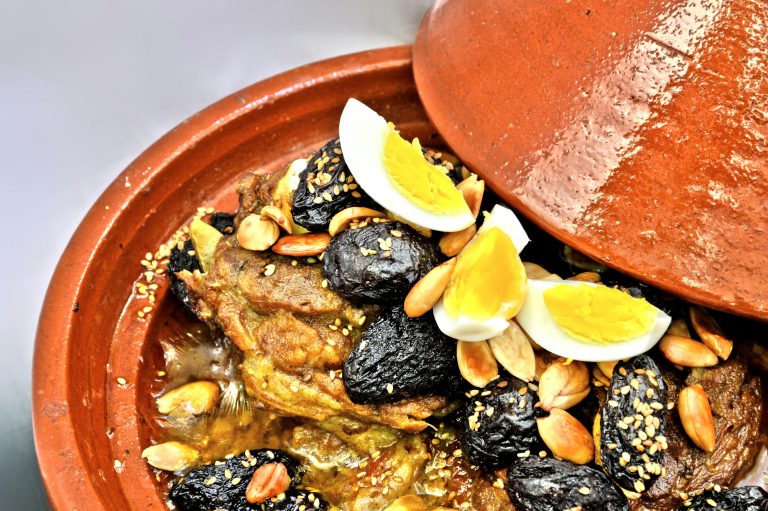
- Tagines with a Local Twist: Yes, you can get a standard lamb tagine. But be adventurous. Order one with local goat cheese (jben) it melts into a creamy, tangy sauce. Or try one with apples, walnuts, and prunes, a sweet and savory nod to the region’s orchards.
- The Cheese & Honey Combo: This is non-negotiable. Ask for jben chaoui drizzled with that same wild honey. The contrast of tangy, soft cheese and floral, thick honey is a culinary landmark all by itself.
- Foraged Treasures: In season, you might find tagines bursting with wild morels or other mushrooms foraged from the surrounding hills.
Wash it all down with mint tea, of course. But also try a local herbal infusion perhaps louiza (lemon verbena) or zaatar (wild thyme) picked from the hillsides.
Nature’s Embrace: The World Beyond the Blue Walls
Here’s my biggest piece of advice: You must leave the medina. The true magic of Chefchaouen is that it’s the gateway to the breathtaking Rif Mountains. The city isn’t just in a beautiful location; it’s part of an ecosystem.
- The Spanish Mosque: This is the gentle introduction. A 45-minute walk up a well-trodden path east of the medina brings you to a small, abandoned mosque on a hill. Go for sunset. The view back over the town a splash of blue in a bowl of green and brown mountains is iconic. It’s where you grasp the full scale of the place.
- Akchour Waterfalls & God’s Bridge: This is a full-day adventure and worth every second. A 45-minute drive (take a grand taxi) gets you to the trailhead. From there, you hike along a turquoise river, through stunning gorges, to a series of cascading waterfalls perfect for a freezing, exhilarating swim. Further on is the natural rock arch known as the Bridge of God. The hike is moderate, the scenery is straight out of a fantasy novel, and it provides the essential contrast to the medina’s enclosed beauty.
- Talassemtane National Park: For serious hikers and nature lovers, this park is a sanctuary of fir forests, deep valleys, and endangered species. You can find local guides in Chefchaouen for multi-day treks.

Getting There & Getting It Right: Your Practical Blueprint
Chefchaouen feels remote, but it’s well-connected. There’s no train station, so your options are road-based.
By Bus: The most straightforward method. CTM (the major, comfortable line) and other companies run direct buses from:
- Tangier: (2.5 hours) The most common route from an international airport.
- Fes: (4 hours) A scenic journey through the mountains.
- Casablanca/Rabat: (5-6 hours) A longer haul.
Tip: Book CTM tickets online a day or two in advance, especially in high season. The buses are reliable and have air conditioning.
By Grand Taxi: These are shared, older Mercedes sedans that leave when they have six passengers. They’re faster than buses but can be cramped. You can find them at the main taxi stations in any major city. For a group, you can pay for all six seats and have a private ride.
By Car: Renting a car gives you ultimate freedom to explore the region. The roads are winding but paved and generally good. Parking is available in lots just outside the medina walls.
A Few Human Thoughts to Take With You:
- Pace: Give yourself three days, minimum. One for the medina, one for Akchour, and one to just wander and get lost.
- Timing: Mornings (before 10 AM) and early evenings are when the medina belongs to locals. That’s when you’ll feel its true pulse.
- Respect: It’s still a conservative, religious town. Dress modestly (covering shoulders and knees is a sign of respect), and always ask permission before photographing people.
- Get Lost: Seriously. Put the map away. The medina is small and safe. Every dead-end blue alley holds a moment of peace, a stunning vignette, a chance encounter.
The Lasting Impression
Chefchaouen doesn’t shout. It whispers. Its beauty isn’t aggressive or performative. It’s in the quiet hum of daily life, set against an impossible palette of blue and green. It’s a place that asks you to slow down, to sit with a cup of tea and watch the light move across a wall, to hike until your legs ache and then eat a meal that tastes of the earth itself.
You come for the color, yes. But you leave with the memory of a feeling a profound, calming sense of place. It’s less like visiting a destination and more like briefly living inside a poem. And that’s something no filter can ever create.
Frequently Asked Questions About Chefchaouen
What’s the best time of year to visit Chefchaouen?
Spring (April-May) and Fall (September-October) are ideal. The weather is mild, perfect for hiking, and the landscapes are green. Summers can be hot in the days, and winters (especially Dec-Feb) can be quite cold and rainy in the mountains.
Is Chefchaouen safe for solo travelers, including women?
Generally, yes. It’s known as one of Morocco’s safest and most relaxed cities. As always, exercise common sense: dress modestly, avoid isolated areas at night, and be firm but polite with any unwanted attention. Most solo travelers report feeling very comfortable here.
Can I do a day trip to Chefchaouen from Fes or Tangier?
Technically, yes, but I wouldn’t recommend it. The travel time (3-4 hours each way from Fes) means you’d have only a few rushed hours in the medina. You’d miss the serene mornings, the sunset views, and the essential day trip to Akchour. An overnight stay is the absolute minimum to appreciate it.
Are the Akchour Waterfalls difficult to get to?
They require some effort but are accessible to most people with average fitness. You need to take a taxi (45 mins) to the trailhead, then it’s a roughly 1-hour hike each way on a rocky but defined path along the river to the main waterfalls. Wear sturdy shoes with good grip.
What’s one thing most tourists miss in Chefchaouen?
The Ras El Maa spring. It’s just a short walk east from the medina’s edge. Here, you’ll find local women washing clothes in the fresh water, children playing, and a few small cafes. It’s a glimpse into the daily, utilitarian life that the beautiful blue city supports, and it’s utterly authentic.




One Comment