Table of Contents
Marrakech: The Red City That Doesn’t Just Sit There It Grabs You By The Senses
Let’s be clear from the start: nobody is ever truly prepared for their first time in Marrakech. You can read all the guidebooks, study the maps, and think you know what’s coming. I certainly did. But then you step out of your taxi or riad, and it all just… hits you. It’s not a visual first, surprisingly. It’s a sound a low, constant hum of thousands of simultaneous lives, scooters, and distant calls to prayer. Then it’s a smell woodsmoke, orange blossom, baking bread, and just a hint of diesel. Finally, it’s the color: that overwhelming, dusty, beautiful rose-red of the walls that gives the city its nickname, bleeding into the vibrant blues, yellows, and greens of the souks.
This city isn’t a passive postcard. It’s an active, breathing, sometimes-chaotic companion for your journey. It will exhaust you, delight you, confuse you, and ultimately, if you let it, change you a little. I’ve been back four times now, and every visit peels back another layer. This isn’t a list of attractions; it’s an attempt to give you a map to the city’s soul, with all its glorious imperfections.
The Stage is Set: Jemaa el-Fnaa and the Art of Controlled Disorientation
Every story of Marrakech begins at Jemaa el-Fnaa, the vast, UNESCO-listed square that is the city’s undeniable nucleus. Calling it a “square” feels insufficient. It’s a living organism, its personality shifting dramatically with the sun.
By day, it’s a sprawling, slightly dusty carnival. You’ve got the inevitable snake charmers (pro tip: a firm “la, shukran” and walking past is the best policy engaging means expecting payment), henna artists, and water sellers in those incredible fringed hats. The fresh orange juice stalls are everywhere, and for 4 dirhams, you get the best, tangiest shot of vitamin C you’ve ever had. But it feels almost… preparatory.
Come sunset, the magic switch flips. Around 5 PM, a small army of carts rolls in, transforming the square into the world’s greatest open-air kitchen. Great clouds of aromatic smoke billow up, lit by the bare bulbs of each numbered stall. The noise amplifies the sizzle of grills, the clatter of pots, the rhythmic calls of waiters. Stall 14 might be famous for its mechoui (slow-roasted lamb), while another specializes in tagine or piles of glistening sardines.
My strategy? Walk a full lap. Let your nose guide you. Look for the stalls crowded with locals, not just tourists. Then, squeeze onto a bench, order a mixed plate, and just absorb the scene. It’s pure, unadulterated theatre. And above it all, from the surrounding café terraces, hundreds of other visitors are watching the same spectacle, a sea of camera phones glowing like fireflies.

Getting Deliberately Lost: A Survival Guide to the Souks
The covered markets that spiderweb out from the square are not a shopping mall. They are a medieval maze, a psychological test, and a treasure hunt all rolled into one. The key here is to surrender to the experience.
First, the mindset: You will get lost. I’ve done it on every single trip, including last month. Embrace it. The main arteries are packed and pull you in with silks, lanterns, and leather. But the real magic is in the capillary alleyways the street of the wooden spoon carvers, the alley of the natural dyers with skeins of wool hanging like rainbows, the quiet courtyard where old men are hand-beating brass trays with hammers.
A word on bargaining: It’s the expected dance. It’s not hostile; it’s social. See something you like? Ask the price. React with a slight, friendly grimace. Offer half. The vendor will act appalled. You’ll chat, maybe about football, maybe about where you’re from. You’ll go up a little, he’ll come down a lot. You’ll settle somewhere in the middle, shake hands, and he’ll invite you for tea. You don’t have to accept, but the offer is real. Buying a rug? That’s a whole afternoon affair involving several rounds of mint tea and philosophical discussion. Don’t rush it.
What you’re actually seeing: Each souk has a guild, a centuries-old specialization.
- Semetirine: The leather souk. Follow your nose. You’ll find beautiful babouches (slippers) and bags.
- Attarine: Spices, perfumes, and incredible dried mountain herbs that look like witch’s potions.
- Chouari: The carpenters and basket weavers.
- Haddadine: The blacksmiths’ lane, all clanging and sparks.
- El Kebir: The “big” souk, a mix of everything.
If the sensory overload becomes too much, look for a discreet doorway leading up to a café terrace. These aerial escapes, often marked only by a small sign, offer a life-saving cup of tea and a view of the chaos from a peaceful perch.

Sanctuaries of Silence: Where Marrakech Catches Its Breath
The genius of Marrakech’s design is that for every moment of frenzy, there is a counterpoint of profound peace, often hidden behind unassuming walls.
The Gardens:
- Jardin Majorelle: Yes, it’s famous. Yes, it’s crowded. The iconic Yves Saint Laurent blue against the lush green and pops of yellow is still stunning. But here’s the real tip: Buy your ticket online, for a specific time slot, at least a week in advance. The queue without a ticket can be two hours long. The adjacent Yves Saint Laurent Museum is a masterclass in curation and worth the visit for fashion lovers.
- Le Jardin Secret: A newer restoration in the medina, and honestly, one of my favorites. It’s less crowded, impeccably maintained, and features two distinct gardens: an Islamic garden and an exotic garden. The climb up the tower for a view over the medina’s rooftops is sublime.
- The Agdal & Menara Gardens: Vast, olive-tree-filled royal gardens on the outside of the medina. The Menara has a huge reflecting pool with a pavilion, a classic postcard view, especially at sunset. It’s where locals come to picnic and escape.
The Palaces & Madrasas:
- Bahia Palace: “Bahia” means brilliance, and it delivers. This 19th-century palace is a lesson in opulent understatement. Room after room unfolds with some of the finest zellij (mosaic tilework), carved cedar ceilings, and intricate stucco you’ll ever see. Sunlight filters through latticework, painting the floors with moving shadows. It’s cool, quiet, and breathtaking.
- El Badi Palace: The yang to Bahia’s yin. Built in the 16th century and later stripped bare, it’s now a magnificent, haunting ruin. You walk through enormous sun-baked courtyards, along the tops of towering walls, and peer into vast, empty pools. It feels ancient and powerful. The storks that nest on the ramparts add to the atmosphere.
- Ben Youssef Madrasa: Currently closed for long-term restoration (always check before you go), but when open, it’s arguably the most beautiful single site in the city. The central courtyard, with its carved cedar, marble, and stunning zellij, is a silent, scholarly counterpart to the souk’s frenzy.
A Feast for the Brave and the Curious: Marrakech on a Plate
The food here is a direct reflection of the city: diverse, intense, and deeply rewarding.
The Street Food Canon:
- Harira: The ubiquitous lentil and tomato soup, often eaten to break the fast during Ramadan. Hearty, peppery, and comforting.
- Sfenj: North African donuts, light and crispy, often dusted with sugar. Best eaten piping hot from a street-side fryer.
- Mechoui: That slow-roasted lamb from the square, falling off the bone. Order it by weight.
- Snails: A popular broth sold from giant pots. Tastes like… well, garlicky mushrooms with a unique texture. Worth trying once.
The Home-Style Essentials:
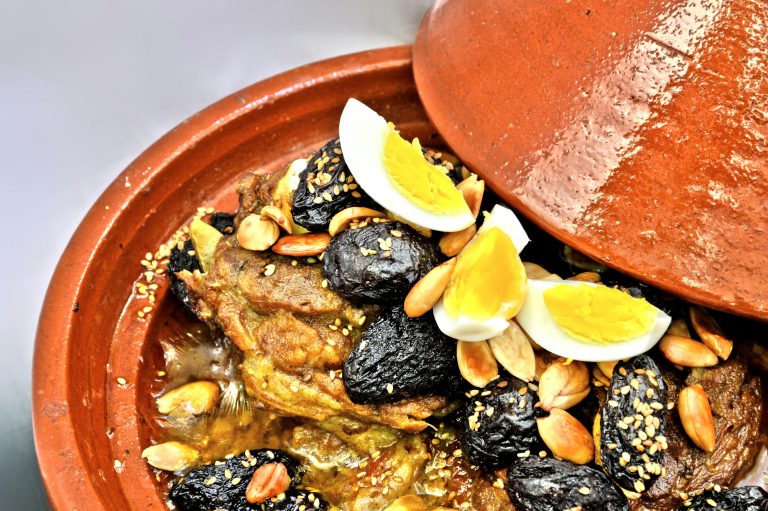
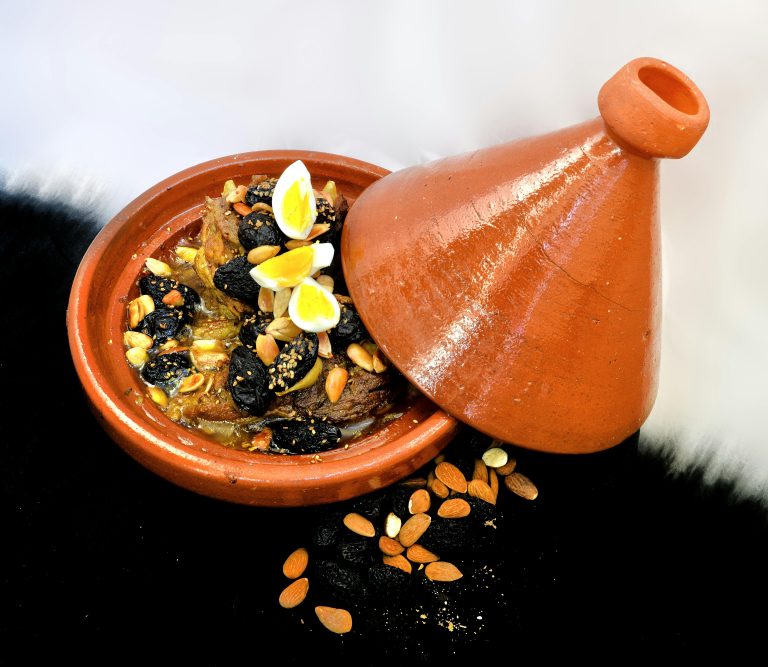
- The Tagine: Obviously. But understand it’s the name of the conical clay pot and the slow-cooked stew inside. Try a kefta tagine (meatballs in tomato and egg) or a preserved lemon and olive chicken tagine.
- Couscous: The Friday special. Fluffy steamed semolina topped with a stew of vegetables and usually meat. It’s a social, sharing dish.
- Pastilla: A flavor explosion. A delicate, crispy warqa pastry layered with spiced, shredded pigeon (or chicken), almonds, and cinnamon, topped with powdered sugar. Sweet, savory, and textural perfection.
My Non-Negotiable Recommendation: Take a Cooking Class.
I did this on my second visit, and it was a revelation. It usually starts with a guided tour of a local market where you learn about spices distinguishing between real saffron and fakes, smelling the different types of paprika. Then, you retreat to a beautiful riad kitchen to learn the secrets. You’ll learn to make your own bread, a tagine, and perhaps a dessert. It demystifies the cuisine and gives you a skill to take home. Plus, you get to eat an incredible meal you helped create.

Escape Routes: The Essential Day Trips
Staying only in the medina can be intense. Luckily, some of Morocco’s greatest wonders are a short journey away.
1. The Atlas Mountains (Ourika Valley or Imlil):
An hour’s drive south and you’re in another world. The air is cool and clear, the landscape is staggering. Imlil is the gateway for trekking to Mount Toubkal, North Africa’s highest peak. Even a short walk through the terraced villages here is restorative. You’ll be invited for tea in a Berber home—accept. The hospitality is genuine and humbling.
2. Essaouira:
If Marrakech is a roaring fire, Essaouira is a cool sea breeze. This fortified 18th-century port town on the Atlantic is about a 2.5-hour drive west. The medina is peaceful, painted in blues and whites, famous for its thuya wood carving and incredible, cheap seafood. Grilled oysters, calamari, and fish are sold right on the harbor wall. It’s the perfect 1-2 night getaway to decompress.
3. The Agafay Desert:
Don’t have three days for the Sahara? The Agafay, a rocky, lunar-like desert plateau just 45 minutes from Marrakech, offers a stunning substitute. It’s not sand dunes, but its vast, silent beauty is equally powerful. Come for a sunset camel ride and a luxurious dinner under the stars at one of the many desert camps.
4. Ouzoud Waterfalls:
East of the city, these are North Africa’s tallest waterfalls. It’s a popular day trip involving a scenic hike down to the base, where you can take a boat ride and get soaked by the spray. The path is lined with (sometimes cheeky) Barbary macaques.
The Nitty-Gritty: A Pragmatic Packing List for the Senses
- Shoes: Comfortable, closed-toe walking shoes. The streets are uneven, dusty, and sometimes messy.
- Clothing: Modest, loose, and breathable is the rule. Linen and cotton are your friends. Cover shoulders and knees as a sign of respect; it also significantly reduces unwanted attention.
- In Your Daybag: Hand sanitizer, tissues (bathrooms often lack paper), a portable power bank, a refillable water bottle, and small change for toilets and tips.
- Money: Get some local Dirhams at an ATM. While cards are accepted in larger riads and restaurants, cash is king in the souks and for taxis.
- Taxis: The little red petits taxis are cheap. Always insist they use the meter (“ashan al-compteur, min fadlik”). If they refuse, get out and find another. From the airport, pre-booking a transfer with your hotel is the least stressful option.
- Staying: For the full experience, a riad in the medina is unforgettable. For more space and resort-style amenities, look to the Palmeraie (palm grove) or the Gueliz (new town) neighborhoods.
The Final, Lasting Impression
You don’t really see Marrakech. You feel it in your tired feet at the end of a souk-day. You taste it in the last sip of sweet mint tea. You hear it in the 4 AM call to prayer that echoes over a suddenly silent city. It’s a place that operates on its own logic, a beautiful, maddening, glorious puzzle.
It asks for your patience and rewards it with moments of sheer wonder—a hidden courtyard garden, a shared laugh with a shopkeeper over a failed bargain, the first bite of a perfectly spiced tagine as the sun sets. You’ll leave exhausted, your suitcase a bit heavier with treasures, and your mind full of impossible colors and sounds. And I’d bet anything, within a year, you’ll start to feel a quiet, persistent pull to return. The Red City has a way of doing that. It gets under your skin and becomes a part of your own story.
Primary Keyword: Marrakech travel guide
Secondary Keywords: things to do in Marrakech, Jemaa el-Fnaa square, Marrakech souks bargaining, Atlas Mountains day trip, where to stay in Marrakech medina
Marrakech Travel FAQ: Straight Answers for Your Trip
Is Marrakech safe for solo female travelers?
Generally, yes, but it requires a specific mindset. The main issue is verbal hassle and persistent attention in crowded areas like Jemaa el-Fnaa. Dressing modestly (covering shoulders & knees) dramatically reduces this. Walk with confidence, use a firm “No, thank you,” and avoid isolated alleys at night. Most women report feeling safe, just occasionally annoyed.
What’s the biggest mistake first-time visitors make?
Two things: Not budgeting enough time, and trying to see it like a museum. Trying to “do” Marrakech in 2 days is a recipe for stress. You need time to get lost and decompress. Also, it’s not a checklist. The value is in the experience—sipping tea, people-watching, wandering without a fixed goal.
How do I handle the constant pressure from vendors and guides?
A polite, firm, and consistent “La, shukran” (No, thank you) without breaking stride is your best tool. Do not engage in lengthy “maybe later” conversations. If someone claims to be an “official guide,” ask for their government-issued guide card. It’s okay to be assertive. The hassle is worst near the main square and mellows out as you explore deeper alleys.
Can I drink the tap water?
It’s not recommended. Stick to bottled or filtered water. Most riads and hotels provide free bottled water or have filtered dispensers. Use bottled water for brushing your teeth to be extra cautious. This is the single easiest way to avoid stomach issues.
Is it worth going to a luxury hotel in the Palmeraie, or should I stay in a medina riad?
It depends on your travel style. For a first visit, a riad in the medina is the iconic experience—you’re in the heart of the action, staying in a beautiful, traditional house. It can be noisy, though. The Palmeraie offers spacious resorts, pools, and quiet, but you’ll be a 15-20 minute taxi ride from the main sights. Some travelers split their stay to get both experiences.